Decals for Plastic Surfaces (HDPE, Polypropylene)
Decals don’t fail on plastic because of poor print quality; they fail because the surface itself resists adhesion. Materials like HDPE and polypropylene are classified as low surface energy (LSE) plastics, meaning standard vinyl adhesives cannot properly bond to them. Since standard vinyl adhesives cannot properly bond to these surfaces, this leads to edge lift, peeling, and premature failure. If you're applying decals to plastic bins, equipment housings, or molded parts, selecting the correct adhesive system is critical.
In simple terms:
If your decal won't stick to plastic, it's usually because the surface is too smooth and chemically resistant. Standard adhesives can't grip it. You need a high-tack material designed specifically for plastics like HDPE and polypropylene.
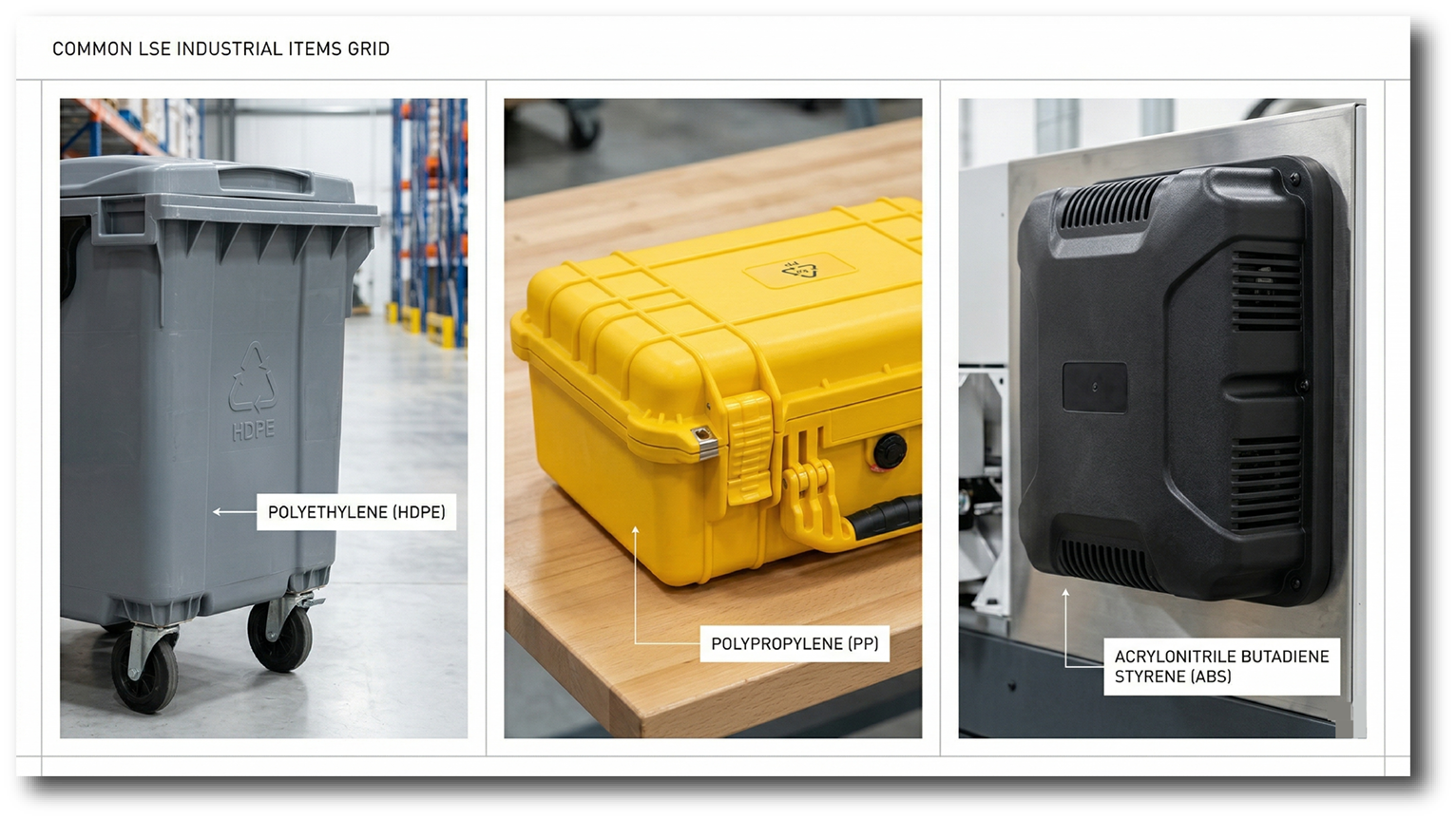
What Are Low Surface Energy (LSE) Plastics?
Certain plastics are chemically engineered in a way that makes them exceptionally difficult to adhere to. These plastics don't "pull" adhesive into their surface, preventing a strong bond.
Common LSE plastics include:
- HDPE: Frequently used for trash bins and industrial barrels.
- Polypropylene: The standard for molded containers and automotive parts.
- ABS: A rigid plastic that can sometimes be tricky for standard adhesives.
Why Standard Decals Fail on Plastic
When standard vinyl is applied to LSE plastics, the issue isn’t installation; it's chemistry. Standard adhesives act like water on a waxed car. They bead up and don't spread out.
- They don’t spread (no “wet out”)
- They can’t penetrate microscopic surface texture.
- They sit on top instead of bonding
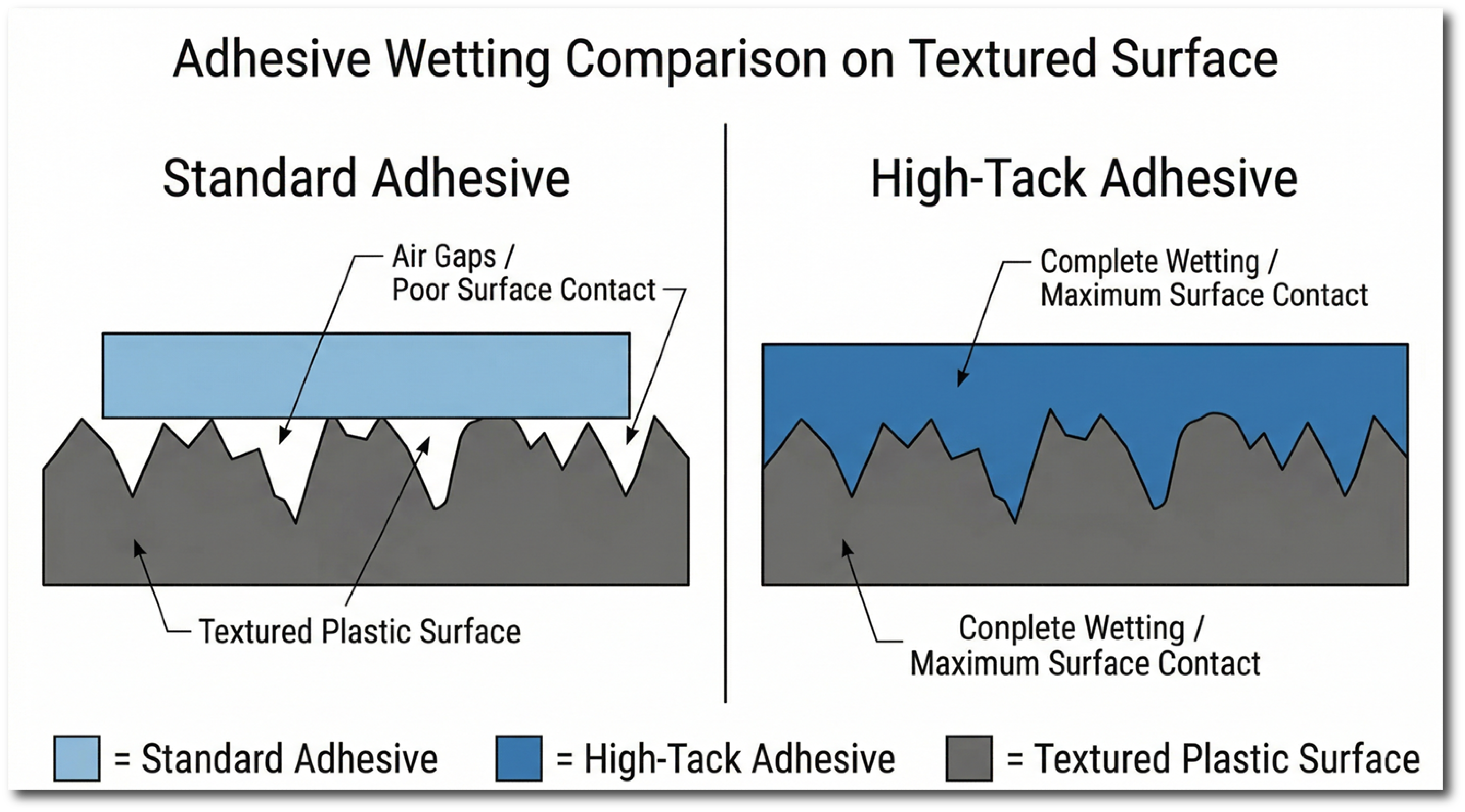
This fails because:
- The adhesive cannot "wet out": The surface is too smooth and non-porous.
- Chemical resistance: The inherent chemical makeup of the plastic physically blocks the bonding process.
- The adhesive is too "stiff": It simply sits on top of the surface and cannot grip smooth plastics.
- The Result: This lack of flow means there is less contact area, resulting in a weaker bond and easy peeling.
The "Wet Out" Concept Explained
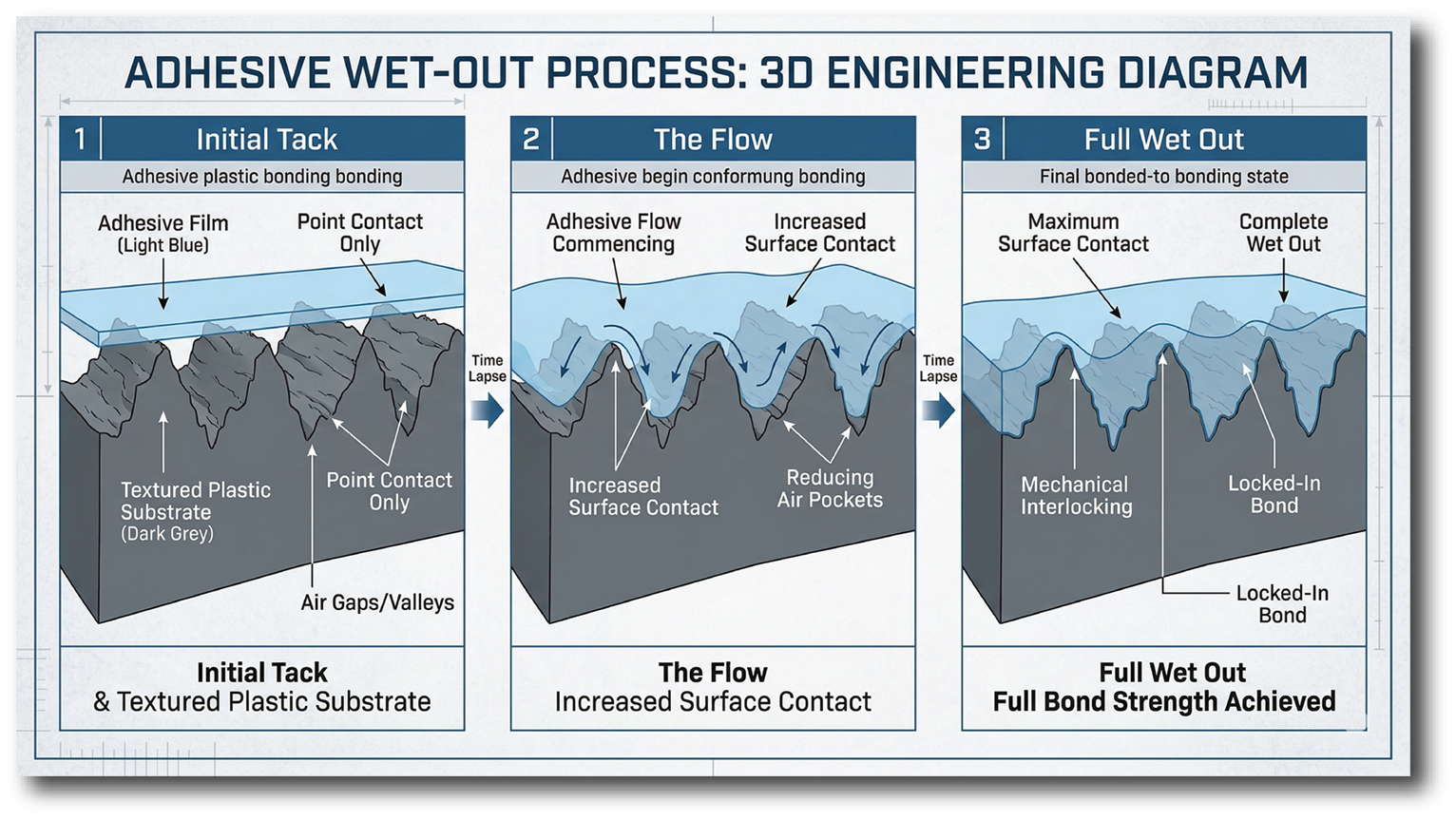
Think of adhesive "wet out" like spreading cold butter on toast. When you first drop a piece of butter on the bread, it's just sitting on top. It's "stuck," but you could easily flick it off with a finger. Wet out is what happens when that butter starts to melt and soak into all the tiny nooks and crannies of the toast.
- Initial Contact (The "Tack"): When you first press the sticker down, only the "peaks" of the adhesive are touching the surface. It's held in place, but it hasn't reached its full strength yet.
- The Flow (The "Wet Out"): Over the next 24 to 72 hours, the adhesive acts like a very slow-moving liquid. It slowly flows downward, filling in the microscopic "valleys" and pores of the surface.
- The Bond (Full Adhesion): Once the adhesive has "wetted out," it has maximized its surface area contact. Instead of just sitting on top, it is now "interlocked" with the surface.
Standard adhesives tend to bead up on slick plastics, but high-tack adhesives flow into the surface, creating a stronger bond that resists peeling. On LSE plastics, standard adhesives never fully “wet out,” which is why they fail even when applied correctly.
The Solution: High-Tack Adhesives
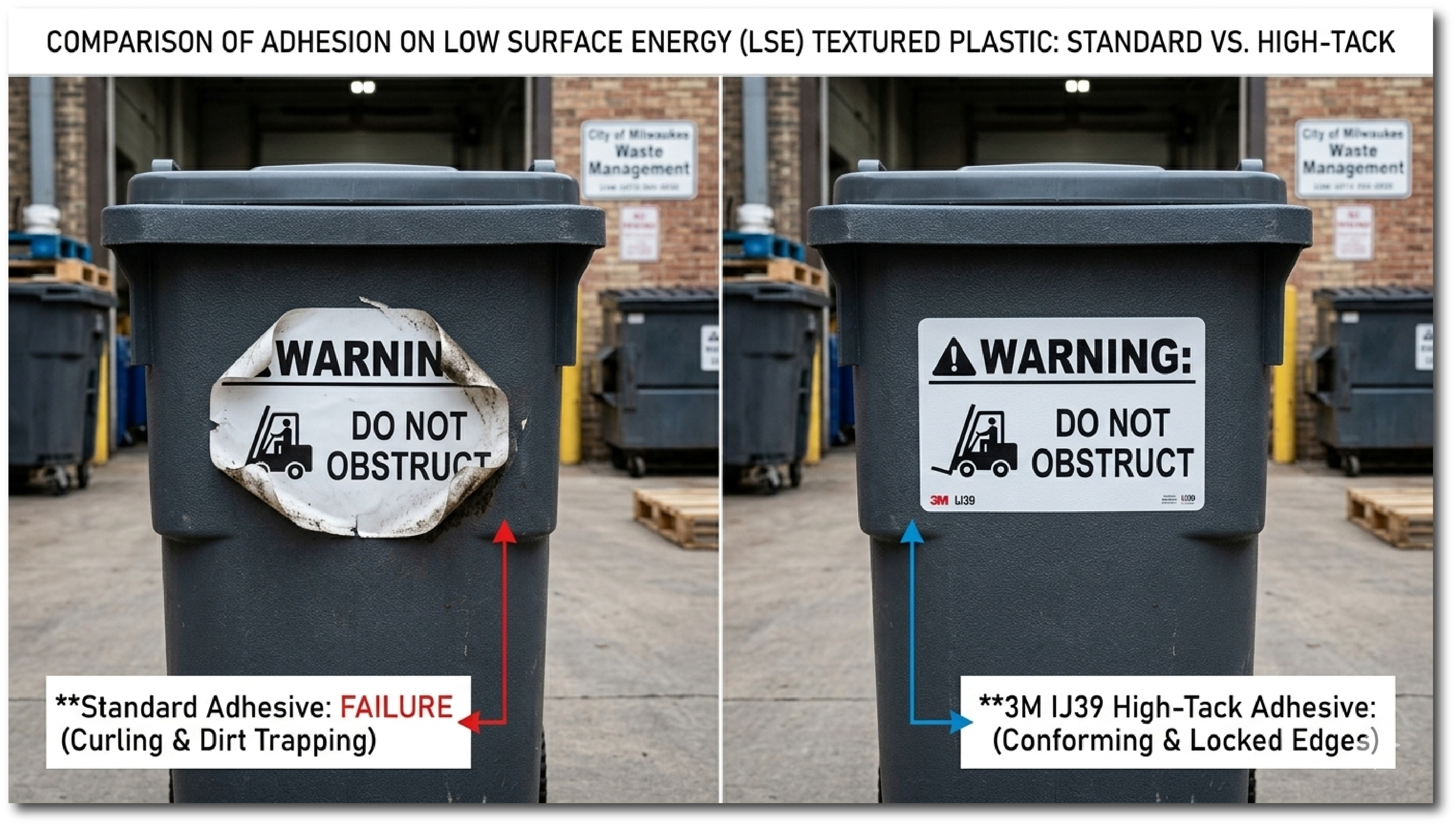
To overcome the chemical resistance of LSE plastics, you must specify a high-tack adhesive system. High-tack films such as 3M IJ39 are designed specifically for these surfaces.
This works because high-tack adhesives are formulated to flow more easily, allowing them to “wet out” and grip surfaces that would normally resist adhesion. They act more like thick syrup instead of water.
- Lower Viscosity: High-tack adhesives are engineered for LSE surfaces with a lower viscosity, allowing for better flow.
- Mechanical Bonding: Because the adhesive is more flexible, it pushes into tiny surface imperfections and creates more contact area. This flow creates a stronger mechanical bond.
Common Applications for Plastic Decals
Specifying a high-tack film is a mechanical necessity for the following applications:
- Trash bins (HDPE)
- Toolboxes
- Equipment housings
- Molded containers
- Storage totes
Surface Preparation Matters
Even the most aggressive high-tack adhesive will fail if the surface is contaminated. Proper surface preparation is mandatory for LSE plastics.
- Clean with IPA: Always prep the surface with Isopropyl Alcohol.
- Remove Contaminants: It is critical to aggressively remove any lingering machine oils or factory mold release agents, which act as invisible barriers to adhesion.
- Apply at Proper Temperature: Ensure both the ambient air and the surface meet the manufacturer’s required temperature thresholds during application.
How Long Will Decals Last on Plastic?
The lifespan of a decal on an LSE surface depends heavily on the material specified and the environment it operates in. While environmental exposure matters significantly to the base vinyl and ink, specifying a high-tack adhesive guarantees a longer operational life by preventing premature edge lift and peeling.
When You Need High-Tack Decals
You likely need a high-tack adhesive if:
Need Decals That Will Actually Stick to Plastic?
Stop wasting budget on standard stickers that peel and fail. Contact our team to discuss your specific application, and we will specify the exact high-tack material required for your project.
Get in Touch with Good Guys Signs:
Still not sure which vinyl to use? Check out our Vinyl Selection Framework.
 (800) 215-6424


